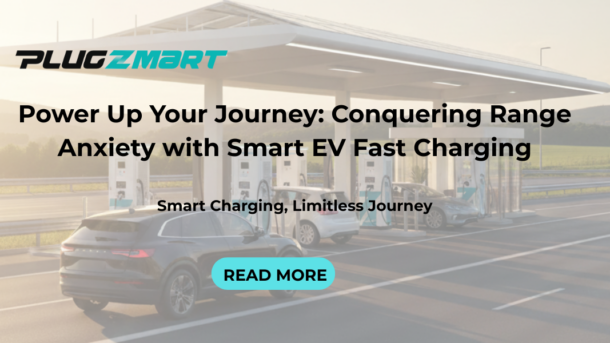
Range anxiety hits every EV driver at some point. Maybe it is your first highway trip or an unfamiliar route with fewer public chargers. The good news is that fast-charging networks in India are growing quickly, and knowing how to use them smartly can take the stress out of long-distance EV travel.
So let us talk about fast charging, range confidence, and what actually helps you stay road-ready.
Understand What Fast Charging Actually Does
Here is the thing: AC charging tops up your EV slowly because it uses the car’s onboard charger. DC fast charging bypasses that and feeds power directly to the battery. That’s why a 60 kW or 120 kW charger feels like magic during long trips.
But fast charging is not meant to replace your home AC charger. It is meant to bridge gaps on highways and give you predictable range boosts whenever you need them.
Knowing when to use fast charging and when not to makes EV ownership smooth instead of stressful.
Plan Your Trips Around Reliable Chargers, Not Just Icons on a Map
Anyone can list a charging point. Not every charging point works the way you expect.
What actually matters:
- Stations with high uptime
- Stations with multiple charging guns
- Stations placed near food or rest stops
- Chargers from manufacturers who test their hardware for Indian conditions
If a highway charger has a reputation for downtime, skip it. If a station is powered by hardware from experienced Indian EV charger manufacturers — Plugzmart, Delta, Magenta, Exicom — you are usually safer.
A good rule: trust consistency, not just convenience.
Understand How Your EV Responds to Fast Charging
Every battery has a sweet spot. Fast chargers push the most power between roughly 10% and 60%. After that, charging slows down to protect the cells.
So, the most efficient charging strategy during road trips is:
- Start charging around 15–20%
- Stop charging around 70% unless necessary
- Do multiple short fast-charging stops instead of one long session
You save time, reduce heat, and keep the battery healthier.
Use Fast Charging to Reduce Range Anxiety, Not Increase It
Some EV owners end up more anxious after they start fast charging because they expect it to solve everything instantly.
Here is what really helps:
- Leave home with a full AC charge
- Stretch fast-charging stops intelligently
- Keep backup stations pinned on your map
- Avoid reaching below 10% unless absolutely necessary
- Charge a bit extra before isolated highway patches
Think of fast charging as a safety net, not a crutch.
Avoid These Common Mistakes
Most range anxiety issues happen because of predictable mistakes. The big ones:
1. Charging only when the battery is low
Do not wait for 5% unless you are confident about the next station.
2. Staying too long at the fast charger
After 60–70%, the extra time is not worth it.
3. Depending on a single charging network
Use a mix of apps to avoid surprises.
4. Skipping pre-trip energy checks
Tyre pressure alone can change your real-world range by 10–12%.
Keep Your EV Battery Healthy While Fast Charging
Fast charging is safe, but frequent heavy use can warm up the battery. That is normal. What matters is managing it smartly.
You can extend battery health by:
- Preferring AC charging at home
- Using fast chargers mainly for long-distance trips
- Avoiding back-to-back DC sessions
- Parking in shade after long trips to cool the battery naturally
Your battery will treat you well if you treat it right.
Choose the Right Fast Chargers When You Have Options
Range confidence is not only about your EV. It is about the charger you pick.
Look for stations with:
- High-quality hardware
- Good cooling
- Multiple connectors
- Real-time availability
- OCPP-backed CMS dashboards (meaning the hardware is smarter and more reliable)
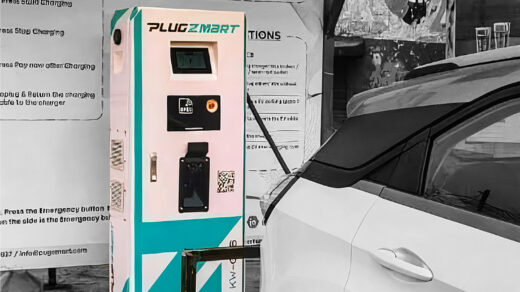
Plugzmart’s higher-capacity chargers are a good example. They are built for Indian heat, high traffic, and long-duration usage. Chargers like these are the ones you want powering highway stops and commercial hubs.
What This Really Means
Fast charging does not eliminate range anxiety by itself. What eliminates it is understanding how your EV behaves, choosing the right chargers, and planning your route with a bit of common sense.
Once you get the hang of it, long EV trips stop feeling like experiments and start feeling like freedom.
FAQS :
Does fast charging damage my EV battery?
No — occasional fast charging is completely safe. Modern EVs have built-in thermal management and protection systems. However, frequent back-to-back DC charging can generate excess heat. Using home AC charging for daily needs and reserving fast charging for long trips keeps the battery healthier in the long run
Should I always charge my EV to 100% before a long trip?
Not necessary. Charging to 80–90% is usually enough for most trips and saves time. Only charge to 100% when you know the next stretch has very few charging options.
Why does fast charging slow down after 60–70%?
This is normal battery behaviour. EVs reduce charging speed to protect battery health and manage heat. The fastest charging happens between 10% and 60%, which is why shorter, more frequent charging stops are more efficient than one long session.