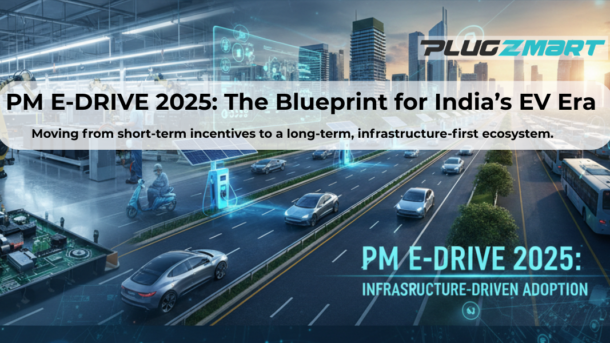
India’s EV policy landscape is entering a new phase. With the PM E-DRIVE Scheme 2025, the focus is shifting from short-term demand to long-term ecosystem building.
This scheme is not just about selling more EVs. It aims to address the weak links that slowed adoption before, such as charging access, manufacturing depth, cost predictability, and buyer confidence.
Let’s break down what PM E-DRIVE really means and who stands to benefit the most.
What Is PM E-DRIVE, in Simple Terms?
PM E-DRIVE is a new framework that succeeds earlier EV incentive programs. Instead of focusing only on vehicle subsidies, it examines the entire EV value chain. This includes:
– EV manufacturing and component localization
– Charging infrastructure and grid readiness
– Cost reduction for end users
– Support for fleets and commercial adoption
This shift means moving from incentive-driven adoption to infrastructure-driven adoption.
Why the Shift Matters
Earlier schemes helped start the EV market, but they had limitations. Incentives changed often. Supply chains still relied on imports. Charging infrastructure fell behind vehicle sales in many areas. PM E-DRIVE tries to fix this imbalance. Instead of asking buyers to take a big risk, the scheme aims to make EV ownership seem practical and predictable.
How EV Manufacturers Benefit For manufacturers,
PM E-DRIVE offers clarity and stability.
1. Stronger Push for Local Manufacturing The scheme encourages domestic production of EV components, power electronics, and charging hardware. This reduces reliance on imports and helps manufacturers manage costs better.
2. Demand Visibility With long-term policy direction, manufacturers can plan capacity, tooling, and supplier partnerships with greater confidence instead of reacting to short-term subsidy cycles.
3. Connection With Charging Infrastructure Vehicle adoption is now more closely linked to charging rollout. This lowers the risk of selling EVs in markets where charging access is limited. For EV charger manufacturers and solution providers, this connection is especially important. Hardware, software, and grid integration become part of the same growth story rather than separate efforts.
Why Charging Infrastructure Is Central to PM E-DRIVE
One of the clearest signals from the scheme is that charging is no longer treated as an afterthought.
The policy recognizes that:
- EV adoption cannot outpace charging availability.
- Poor uptime damages trust faster than high prices.
- Software and interoperability matter as much as hardware.
This creates opportunities for companies working on smart chargers, charging management systems, and grid-aware deployments.
Instead of a fragmented rollout, the ecosystem moves toward standardized, scalable infrastructure.
What This Means for the EV Ecosystem
PM E-DRIVE sets the tone for the next phase of EV growth in India. Manufacturers gain predictability. Buyers gain confidence. Infrastructure providers gain relevance. The scheme does not promise instant transformation. It promises direction. In a fast-moving industry, clear direction is more important than short-term incentives.
PM E-DRIVE 2025 shows that the EV market is maturing. The focus is no longer just on increasing numbers; it is now about creating systems that work at scale. For manufacturers, this is an opportunity to build sustainably. For buyers, it indicates that EVs are becoming the standard, not just an experiment. For the ecosystem, it serves as a reminder that charging, manufacturing, and policy need to progress together. If this collaboration continues, India’s EV transition will feel less like a leap and more like a natural step forward.