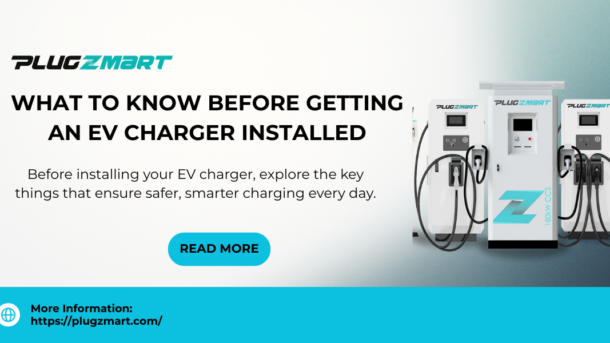
If you’re planning to install an EV charger at home or inside a residential project, there are a few things you should understand before you pick a device or call an electrician. EV charging feels simple on the surface, but the details matter more than people expect. So let’s break it down in a way that actually helps you make the right call.
Start With Your Electrical Setup
Before anything else, you need clarity on the power situation in your home or building. A lot of people skip this part and jump straight into buying chargers online, only to realise later that their wiring or load capacity can’t support it.
Here’s the thing: every EV charger, whether it’s a 7.4 kW AC charger or a higher-powered unit, needs a stable supply. That means checking:
- Your sanctioned load
- Your wiring condition
- Your meter and MCB setup
- Whether your panel can support an additional dedicated line
If you’re living in an apartment, you’ll also need approval from the association or builder. And trust me, it’s easier to sort this early instead of running around later.
Understand the Types of EV Chargers
People hear AC, DC, kW, OCPP, and everything blends into one confusing soup. What this really means is that the charger you pick should match your real usage.
AC chargers work for homes, offices, apartments and daily charging. They’re slower but perfect for overnight charging.
DC chargers are fast and heavy, usually placed in commercial spaces, malls or highway stations.
If someone tries selling you a DC charger for a two-wheeler or a normal car at home, walk away. That’s not how this works.
Pick a Charger That’s Actually Smart
You don’t want a charger that behaves like a simple switchboard. You want something that lets you track consumption, control sessions, get reports and manage users.
Look for:
- OCPP 1.6 compatibility
- App or CMS support
- Load management features
- Safety protections
- Indian conditions-tested hardware
This is where Plugzmart chargers usually stand out because the tech isn’t overhyped, but it actually works. And you need that if your building wants to scale later.
Think About Future Proofing
Right now you might have a single EV. Two years down the line, your parking lot could have ten. So your charging setup should grow with your needs.
If you’re in an apartment or villa community, shared chargers make more sense. If you’re planning a new building, keep the cable routing and panel space EV-ready.
The cost difference between planning early and retrofitting later is massive.
Placement Matters More Than You Think
A charger isn’t a decorative item you can put anywhere. It needs the right wall surface, protection from water, and safe cable routing.
Make sure:
- The charging cable easily reaches your EV
- The unit isn’t exposed to direct splash or accidental damage
- There’s proper earthing
- The wiring path is clean and secure
A well-installed charger lasts longer, works better, and avoids the typical issues people blame on the hardware.
Don’t Ignore Government Guidelines
States like Tamil Nadu have already made EV charging mandatory in new residential, commercial and institutional buildings. Other states will follow the same path.
If you’re a builder or architect, integrating this early isn’t optional anymore. Chargers must be added during the planning stage, not as a last-minute addition.
Choose a Brand Built for Indian Conditions
This is the part most people realise only after something goes wrong. Chargers imported for cooler climates struggle with heat, voltage fluctuations and monsoon conditions.
Pick a charger that’s tested here. One that’s ARAI-approved. One that’s used by real developers, not just sold online without after-sales support.
You want field-tested reliability, not something that quits when the temperature hits 42 degrees.
The Bottom Line
Getting an EV charger installed isn’t complicated when you understand what to look for. Get your electricals checked, pick the right charger type, plan for the future and choose hardware that’s proven in real Indian environments.
If you’re a homeowner, you’ll enjoy smoother charging from day one. If you’re a builder, you’ll stay compliant with state rules and keep your buyers happy.
If you want help figuring out what fits your parking setup or building layout, Plugzmart can guide you through it without overcomplicating anything. Just clarity, good hardware and support that actually shows up.
FAQS
Do I need government approval to install a home EV charger?
In most cases, no. For individual homes, you mainly need to ensure your electrical load supports the charger. However, apartments and gated communities may require approval from the association or builder.
What electrical load is required for a typical home EV charger?
A 7.4 kW AC charger usually needs a higher sanctioned load (often 7 kW and above). Your electrician or CMS provider can help you confirm this before installation.
How long does it take to install an EV charger?
A standard home installation takes 1–3 hours if the wiring route is simple. Complex wiring, long cable routes, or panel upgrades may take longer.