The EV industry in India and around the world is growing fast. Vehicles are hitting the roads, fleets are electrifying, and governments are pushing for cleaner transportation. But one piece of the puzzle is becoming just as important as the vehicles themselves. Charging infrastructure.
Many companies want to enter the EV charging market. The challenge is that building a full charging platform from scratch takes years of software development, integration work, and operational planning.
This is where a white-label EV charging management system becomes extremely valuable.
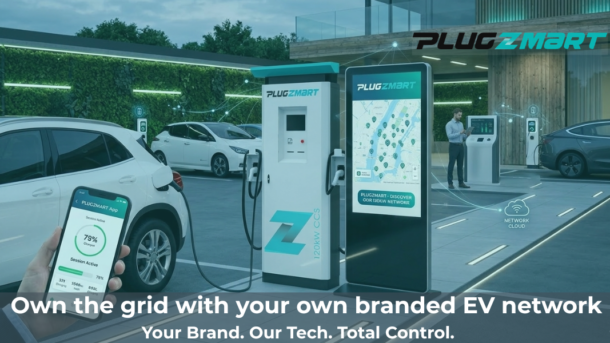
A white-label CMS allows businesses to launch and operate their own EV charging network under their own brand without building the entire technology stack themselves.
What is an EV Charging Management System (CMS)?
An EV Charging Management System is the software platform that connects EV chargers, operators, and users into one system.
Without a CMS, running even a small charging network becomes complicated. Operators need a way to monitor chargers, Start and Stop sessions, Manage pricing, and Track payments.
A typical EV charging CMS handles tasks such as:
- Charger connectivity and control
- Charging session monitoring
- Tariff and billing management
- User authentication and access control
- Charging network analytics
- Integration with other charging networks
In simple terms, the CMS is the brain behind an EV charging network.
Why Businesses Choose White-Label Charging Platforms
Developing EV charging software from scratch requires major investment in backend systems, mobile apps, communication protocols, and payment infrastructure.
A white-label CMS removes this barrier.Instead of building the technology internally, businesses can deploy a ready platform while keeping their own brand identity.
Some of the biggest advantages include:
Faster Market Entry
Companies can launch their charging platform within weeks instead of spending years building software.
Reduced Development Costs
Complex systems such as OCPP integration, payment systems, roaming platforms, and mobile applications are already built into the platform.
Full Brand Ownership
The charging network operates under the company’s own name, app, and branding.
Scalability
A white-label system allows businesses to start with a few chargers and expand to thousands without rebuilding the platform.
Managing Charging Stations with a CPO Dashboard
Charge Point Operators are responsible for installing and maintaining EV chargers.
A white-label CMS provides a dashboard that allows operators to monitor chargers in real time. This includes information such as:
- Whether a charger is available
- Whether it is currently charging
- If the charger is offline
- If a fault has occurred
Operators can also configure charger locations, connector types, power ratings, and access permissions.
This level of visibility helps reduce downtime and maintain a reliable charging network.
Operating an EV Charging Network as an EMSP
In larger charging ecosystems, the platform may act as an eMobility Service Provider.
An EMSP does not manage just one charger or one location. It operates the entire charging network.
Through the platform, multiple organizations can be onboarded. These organizations might include:
- Apartment complexes
- Commercial buildings
- Corporate offices
- Public parking operators
- Fleet charging depots
Each organization manages its chargers while the central platform oversees the entire network.
This structure allows a single branded charging platform to support thousands of chargers across many locations.
Financial Management and Revenue Sharing
Charging networks also require strong financial management tools.
A white-label CMS typically supports:
- Charging transaction tracking
- Automated billing calculations
- Revenue sharing between network operator and clients
- Payment settlement management
These tools ensure transparent operations across the entire charging ecosystem.
Interoperability Through OCPI Integration
EV drivers expect to access chargers across different networks without installing multiple apps.
This is where interoperability becomes important.
Platforms that support OCPI allow charging networks to share charger information and enable roaming between networks.
This means:
- Drivers can access more chargers
- Operators increase charger utilization
- Networks grow faster through collaboration
OCPI integration is becoming a key feature for modern EV charging platforms.
Fleet Charging Management
Fleet electrification is another major driver of EV adoption.
Delivery companies, logistics operators, and corporate fleets require specialized charging tools.
A white-label CMS often includes fleet management features such as:
- Corporate charging wallets
- Driver and vehicle management
- Charging access control
- Charging expense tracking
These tools help companies manage large fleets efficiently.
Mobile Apps for EV Drivers
Most charging networks also provide a mobile application for users.
Through the app, EV drivers can:
- Locate nearby charging stations
- Check charger availability
- Start and stop charging sessions
- Track energy usage and charging costs
- Manage wallet payments
This creates a seamless experience for EV users.
Who Should Use a White-Label EV Charging CMS?
White-label EV charging platforms are useful for many types of businesses entering the EV ecosystem.
These include:
- EV charger manufacturers
- Energy companies
- Parking operators
- Real estate developers
- Fleet operators
- Mobility startups
- Charge Point Operators
- eMobility Service Providers
Instead of focusing on software development, these companies can focus on expanding infrastructure and growing their network.
Final Thoughts
The EV charging industry is evolving quickly. Companies that move early have the opportunity to build strong charging networks and capture long-term market share.
A white-label EV charging management system makes this possible without the complexity of building software from the ground up.
With the right platform in place, businesses can focus on deploying chargers, improving user experience, and scaling their network while the technology handles the heavy lifting behind the scenes.
FAQS :
How fast can I launch?
Instead of years of development, a white-label CMS lets you go live with your own branded app and platform in just 2 to 4 weeks.
Can I use any charger?
Yes. Because the system is OCPP-compliant, you can manage a diverse fleet of chargers (including Plugzmart and other brands) from one single dashboard.
How do I get paid?
The platform features automated billing and integrated payment gateways. It tracks every session and handles revenue sharing between you and your site hosts automatically.