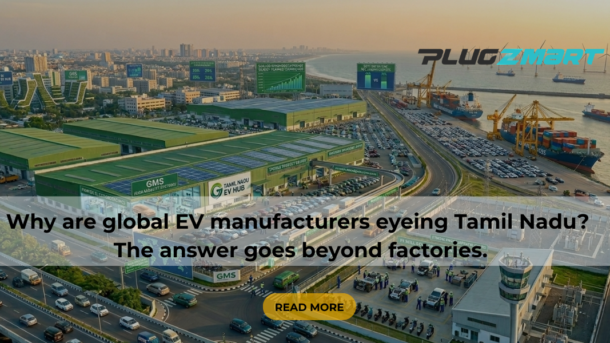
In the race to electrify India’s mobility, one state has quietly pulled ahead of the pack. Tamil Nadu is fast emerging as a national leader in the electric vehicle ecosystem. From policy clarity and industrial capacity to grid readiness and talent, several factors are converging to make the state a magnet for EV manufacturers and ecosystem partners.
If you are part of the EV industry or planning to invest in charging infrastructure, component manufacturing, or vehicle production, Tamil Nadu deserves your attention. Here is why.
1. Forward-Looking EV Policies That Attract Industry
Tamil Nadu has introduced clear regulatory frameworks aimed at encouraging both EV adoption and local manufacturing. Its EV policies offer incentives for setting up factories, creating skilled jobs, and building charging infrastructure.
This consistency gives manufacturers confidence. They can plan long-term rather than reacting to short-term incentives alone.
Investors and OEMs prefer environments where policy risk is low and the path to scale is visible. That is exactly what Tamil Nadu is building.
2. Manufacturing Ecosystem and Supplier Base
Tamil Nadu is already a major automotive manufacturing hub in India. Several global OEMs and tier-1 suppliers are established here. This existing industrial ecosystem offers a ready set of capabilities that EV manufacturers can leverage.
For companies building:
- Battery packs
- Power electronics
- EV motors
- Charging hardware
Tamil Nadu offers easy access to skilled labour, established supply chains, and components that are essential to EV manufacturing.
Being close to suppliers reduces lead times, logistics cost, and risk, which improves margins which is a crucial factor in the early, cost-sensitive years of EV production.
3. Strategic Geography and Port Access
The state’s location is another advantage. With several major ports, including Chennai and Ennore, Tamil Nadu provides direct sea access for both imports and exports.
For manufacturers, this means:
- Faster movement of raw materials
- Easier export of finished products
- Lower logistics cost compared to inland locations
This geographical edge becomes especially relevant for companies that serve both domestic markets and overseas demand.
4. Power Infrastructure and Grid Readiness
EV manufacturing and charging infrastructure demand stable, high-capacity power. Tamil Nadu’s industrial power network is well developed and capable of supporting high loads.
This grid readiness helps in:
- Scaling manufacturing lines
- Powering high-capacity charging stations
- Supporting R&D facilities
Reliable electricity availability reduces downtime and ensures smoother operations, which is especially important for manufacturing processes like battery assembly and power electronics testing.
5. Skilled Workforce and Industrial Training
Tamil Nadu has a strong technical education ecosystem with numerous engineering colleges, polytechnics, and vocational training centres. The result is a steady stream of engineers, technicians, and skilled workers ready to join EV-focused industries.
For manufacturers, this means they can find local talent for:
- Production lines
- Quality assurance
- R&D and design
- Charging infrastructure operations
Having a local talent pipeline significantly lowers recruitment and training costs compared to regions without a strong technical base.
6. EV Adoption Is Taking Off
Policy and industry investments are paying off in adoption figures as well. EV registrations, fleet deployments, and public charger installations are rising steadily across Tamil Nadu.
This creates a virtuous cycle:
- More vehicles lead to more demand for chargers
- More chargers make EVs more practical for buyers
- Confidence grows among fleet operators
- Manufacturers find stronger local markets
For charging hardware makers and service providers, this trend creates demand not just for sales but for maintenance, monitoring, and digital platforms as well.
7. Opportunities for EV Charging Infrastructure
Tamil Nadu is not just about vehicle or component manufacturing. It is also becoming a strategic ground for charging infrastructure.
Developers, CPOs, and software providers see strong demand for:
- Workplace charging
- Highway fast chargers
- Fleet depots
- Residential community installations
- Retail and hospitality charging points
With supportive policy and industrial growth, the state promises both users and providers better ROI opportunities.
8. Collaboration Between Policy, Industry, and Academia
One of Tamil Nadu’s strengths is its collaborative ecosystem. Government bodies, industry associations, and academic institutions often come together to pilot projects, share data, and train talent.
This collaboration accelerates innovation because:
- Startups get government support
- Universities conduct practical R&D
- Companies test technologies in real environments
For manufacturers and technology providers, this means accelerating development cycles and shaping standards rather than waiting for them.
What This Means for EV Manufacturers
If you are a manufacturer of:
- Electric vehicles
- EV chargers
- Battery systems
- Power electronics
- Charging software
then Tamil Nadu offers a compelling combination of:
- Policy support
- Industrial infrastructure
- Skilled labour
- Strategic geography
- Growing local demand
At a time when global supply chains are shifting, Tamil Nadu positions itself as one of India’s premier locations for EV investment and scale.
Final Thoughts
Tamil Nadu’s rise as an EV hub did not happen overnight. It is the result of consistent policy backing, a strong industrial base, strategic infrastructure, and growing market demand.
What this really means is simple.
If you want to be where India’s EV industry evolves fastest, Tamil Nadu is not just an option. It is becoming a preferred destination.
FAQS :
1.Why is Tamil Nadu considered a leading state for EV investment in India?
Tamil Nadu combines clear EV policies, a robust manufacturing ecosystem, strategic port access, reliable power infrastructure, and a skilled workforce. Together, these factors make it an attractive destination for EV manufacturers, component makers, and charging infrastructure providers.
What kind of government support does Tamil Nadu offer for EV manufacturers?
The state has introduced forward-looking EV policies that provide incentives for setting up factories, creating skilled jobs, and building charging infrastructure. These policies reduce regulatory risk and give manufacturers confidence to plan long-term.
Does Tamil Nadu already have an automotive manufacturing base?
Yes. Tamil Nadu is one of India’s major automotive hubs, hosting several global OEMs and tier-1 suppliers. This industrial ecosystem allows EV manufacturers to easily access components, skilled labor, and established supply chains.